
What Marine Animals Can You See in Tayrona National Park?
Along Colombia’s Caribbean coast, where the green mountains of the Sierra Nevada de Santa Marta meet the turquoise waters of the Caribbean Sea, lies one of the country’s most remarkable natural destinations: Tayrona National Natural Park.
Most travelers know Tayrona for its beautiful beaches, tropical forests, and spectacular landscapes. But there is another world waiting beneath the surface.
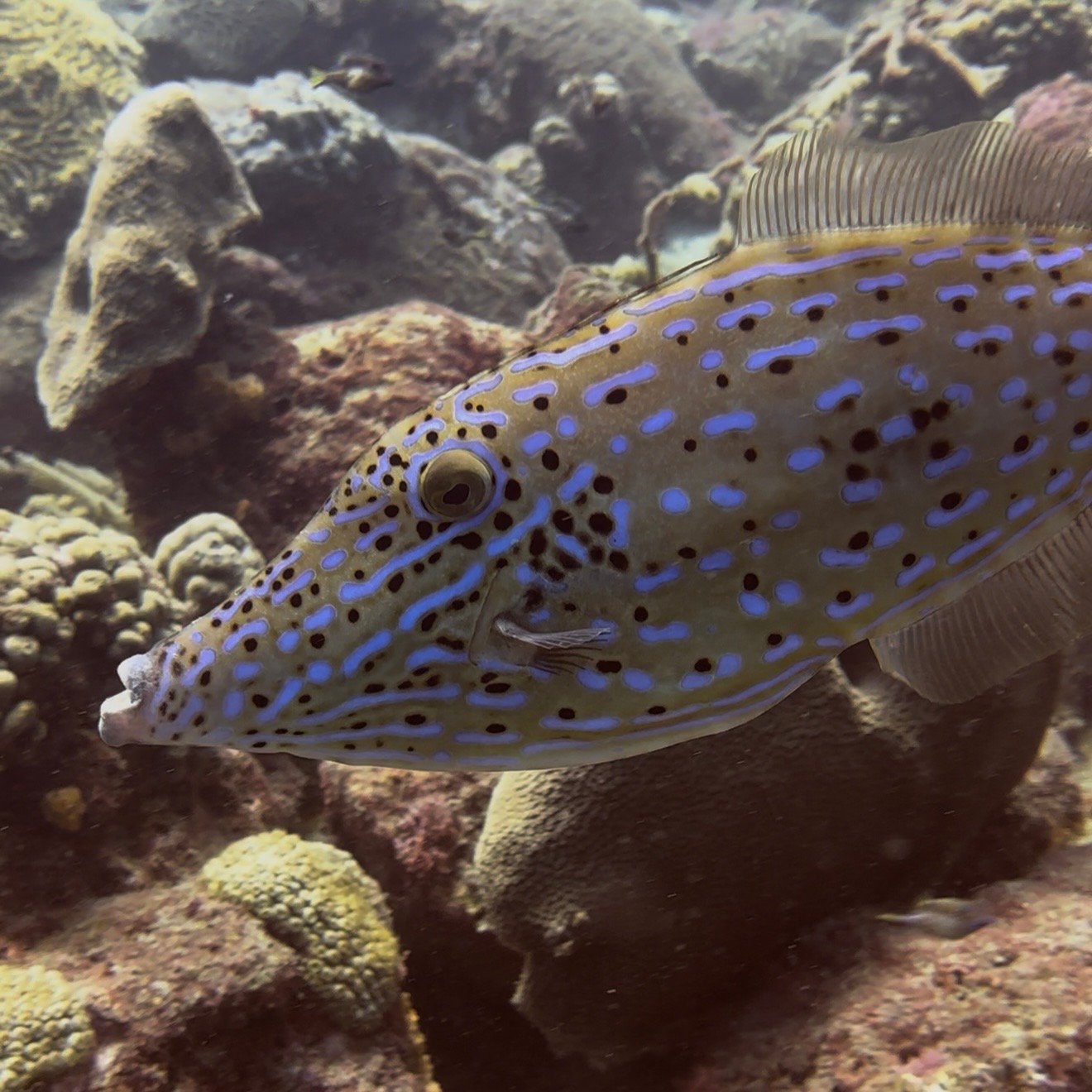
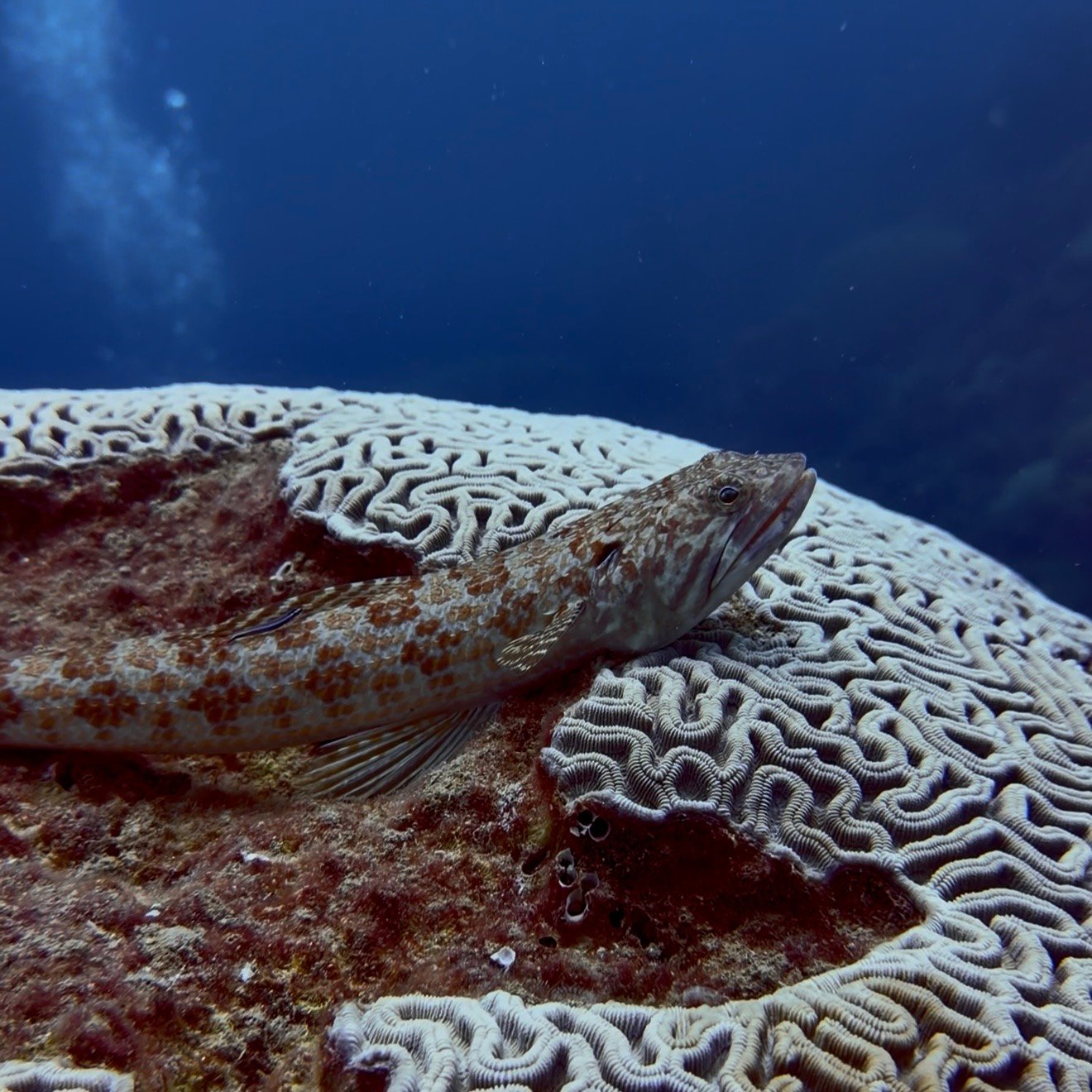
The waters around Tayrona are home to a fascinating variety of marine life, from sea turtles and colorful reef fish to octopuses, moray eels, and other creatures that make every underwater encounter unique.
Whether you are visiting for the beaches, snorkeling, or scuba diving, discovering the marine life is one of the most rewarding ways to experience this part of Colombia.
Here are some of the marine animals you may encounter in the waters around Tayrona National Park.
Sea Turtles
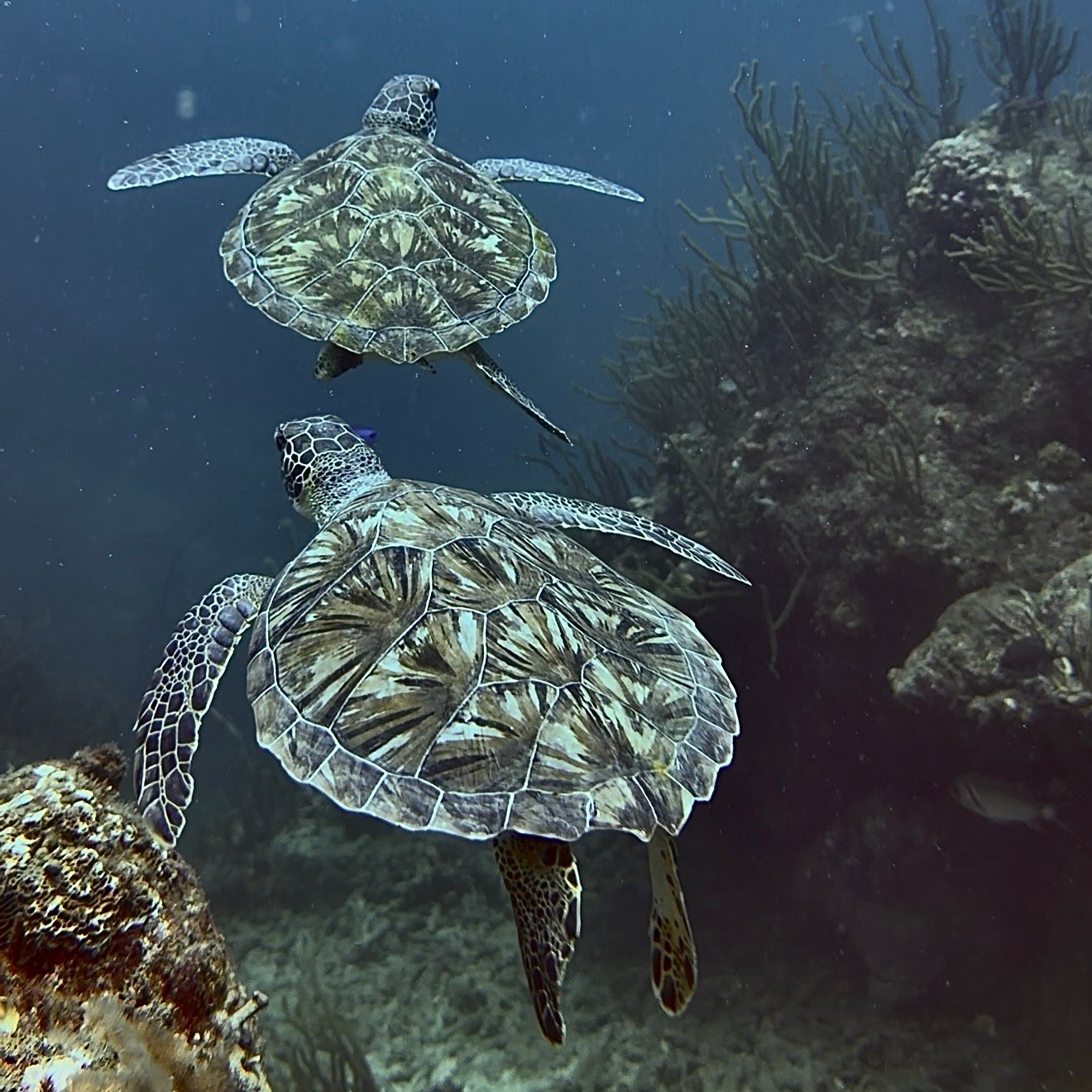
Few underwater encounters are as special as swimming alongside a sea turtle.
Sea turtles are among the most fascinating marine animals found in the Caribbean. They spend much of their lives in the ocean, moving between feeding grounds and nesting areas.
In the waters around Tayrona, divers may encounter sea turtles swimming above rocky reefs, resting near the bottom, or searching for food.
Watching one glide effortlessly through the water is a reminder of how peaceful the underwater world can be.
Sea turtles are protected wildlife. Always observe them from a respectful distance, never touch or chase them, and avoid blocking their natural movement.
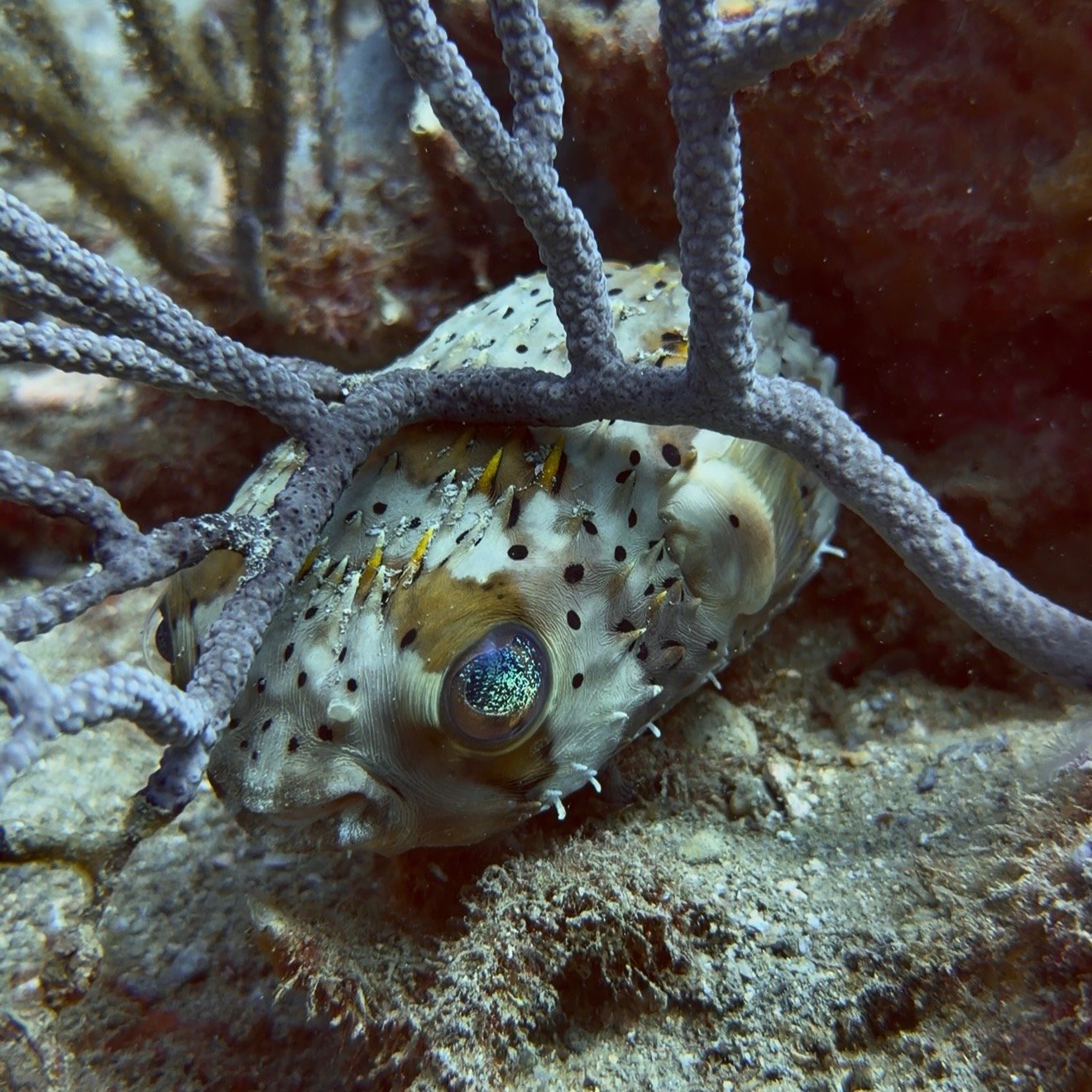
Porcupinefish
With their large eyes, rounded bodies, and unmistakable appearance, porcupinefish are some of the most interesting fish you can encounter underwater.
These fish belong to a group known for their ability to inflate their bodies when threatened, making themselves much larger and more difficult for predators to swallow. Some species also have spines that become more noticeable when inflated.
Porcupinefish often move slowly around rocky areas and reefs, making them fascinating subjects for underwater photography.
Their curious appearance makes them a favorite encounter for divers exploring the Caribbean.
Octopuses
Masters of camouflage, octopuses are among the most intelligent and fascinating animals in the ocean.
They can change their color, texture, and appearance to blend into their surroundings, sometimes becoming almost impossible to distinguish from the rocks around them.
During a dive, you might notice an octopus hiding inside a small opening or moving across the reef in search of food.
Finding one is always exciting because you never quite know where it might appear.
Their ability to solve problems, explore their environment, and adapt to different situations makes them one of the most remarkable creatures in the marine world.
Moray Eels
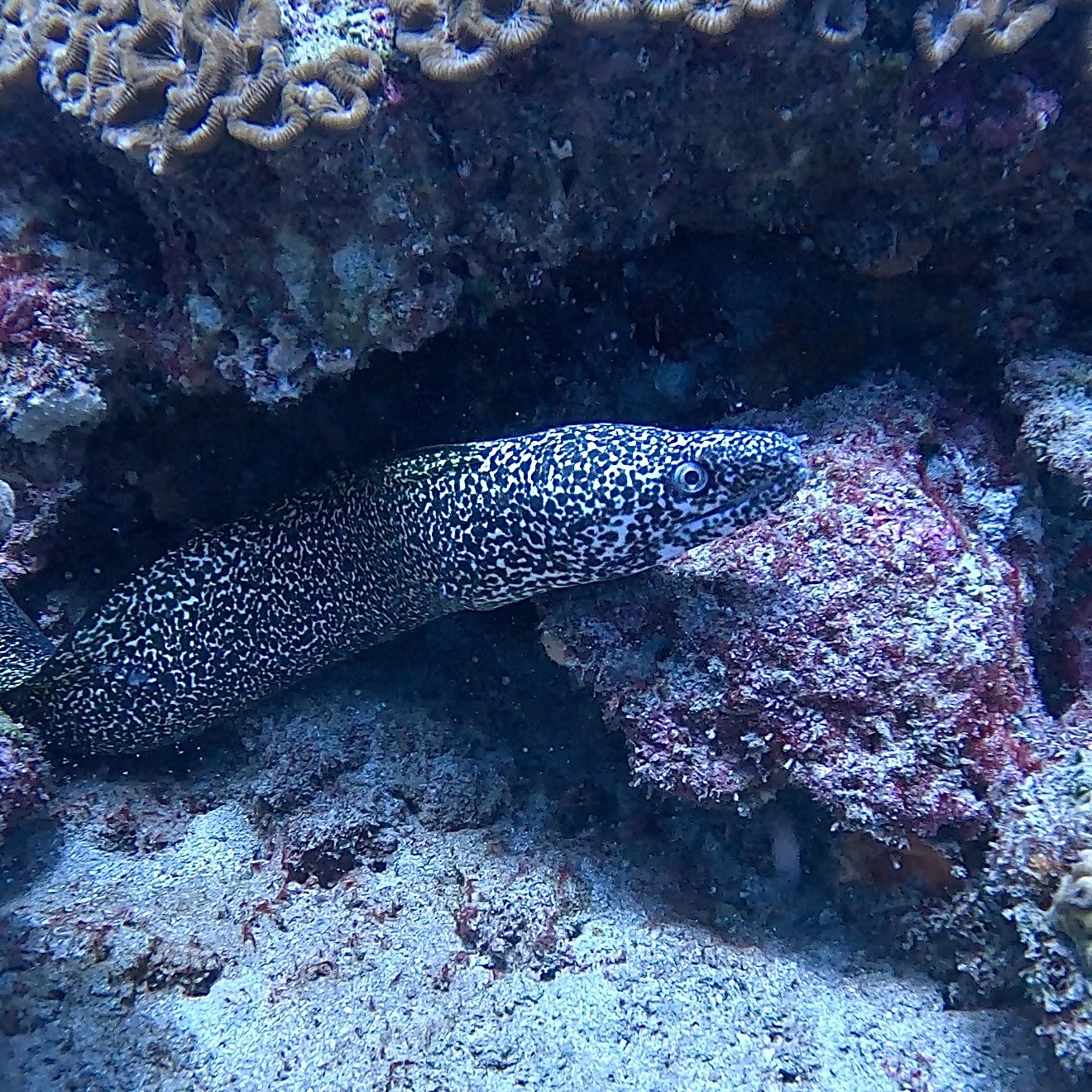
Moray eels are often seen peeking out from small openings between rocks and coral formations.
Their long bodies, distinctive faces, and sharp-looking teeth can make them appear intimidating. However, they generally prefer to remain hidden and avoid confrontation.
Moray eels are an important part of the reef ecosystem. They are predators that feed on fish, crustaceans, and other marine animals.
Look carefully into the crevices of the reef and you may spot one watching the world go by.
There is something fascinating about seeing just a pair of eyes and an open mouth emerging from a dark underwater hiding place.
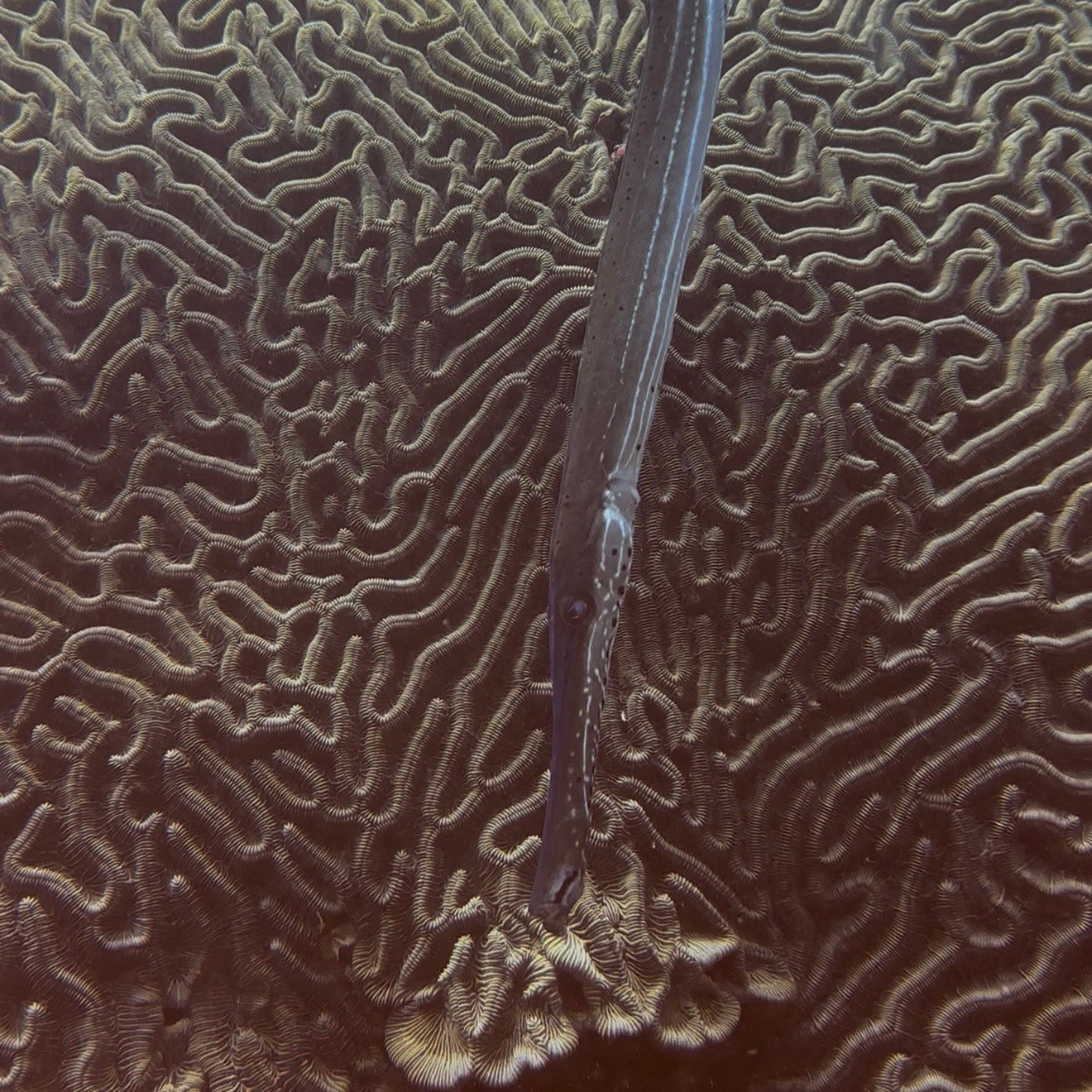
Trumpetfish
With their long, slender bodies and tube-shaped mouths, trumpetfish are among the most recognizable fish on Caribbean reefs.
They often remain almost motionless in a vertical position, blending into their surroundings while waiting for an opportunity to catch smaller fish.
Their unusual shape and hunting behavior make them particularly interesting to observe.
Sometimes you can find them hovering near coral formations or swimming slowly alongside divers.
Angelfish and Parrotfish
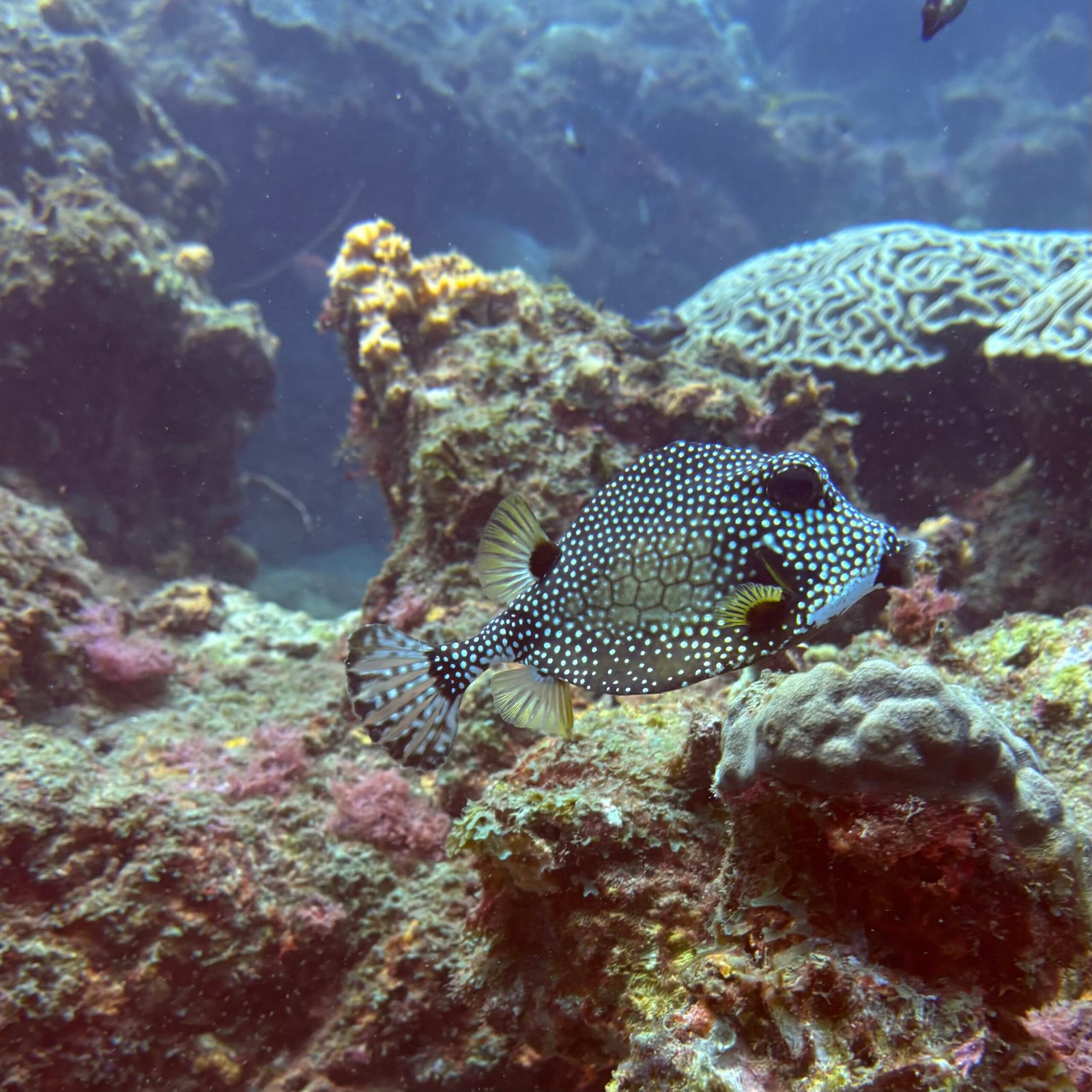
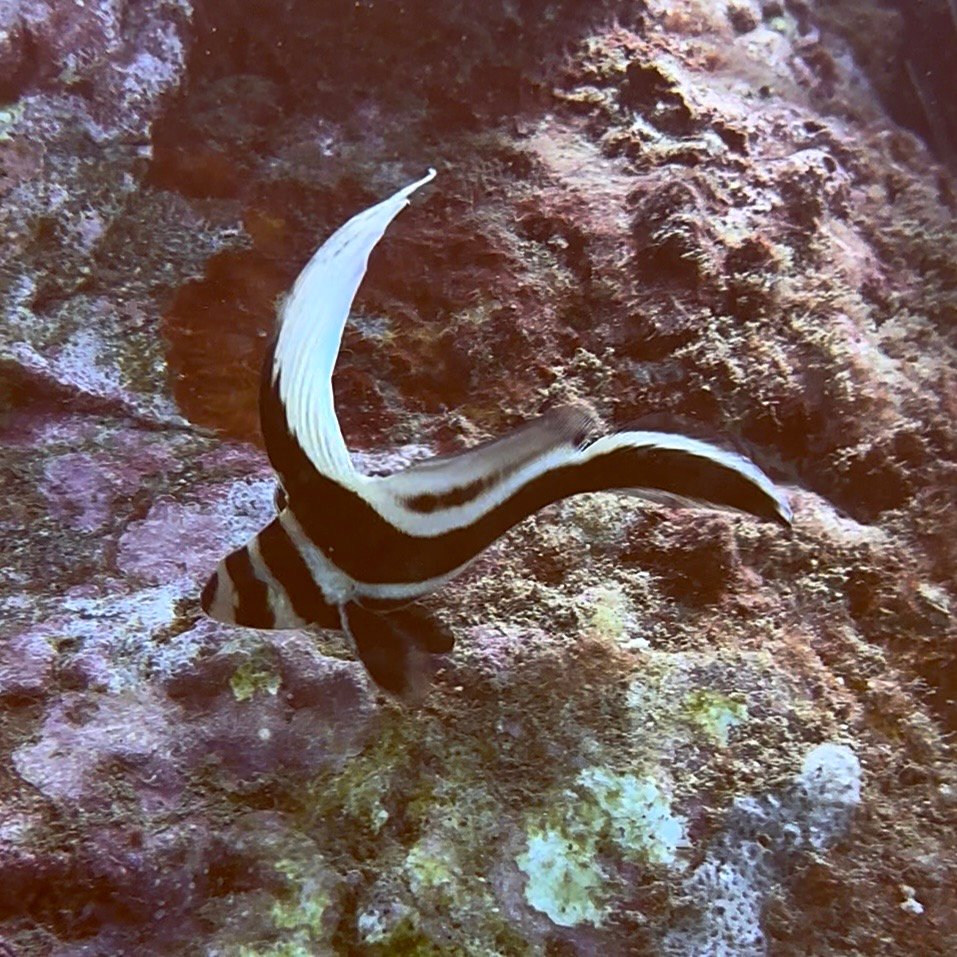
Colorful reef fish are an essential part of the underwater landscape in Tayrona.
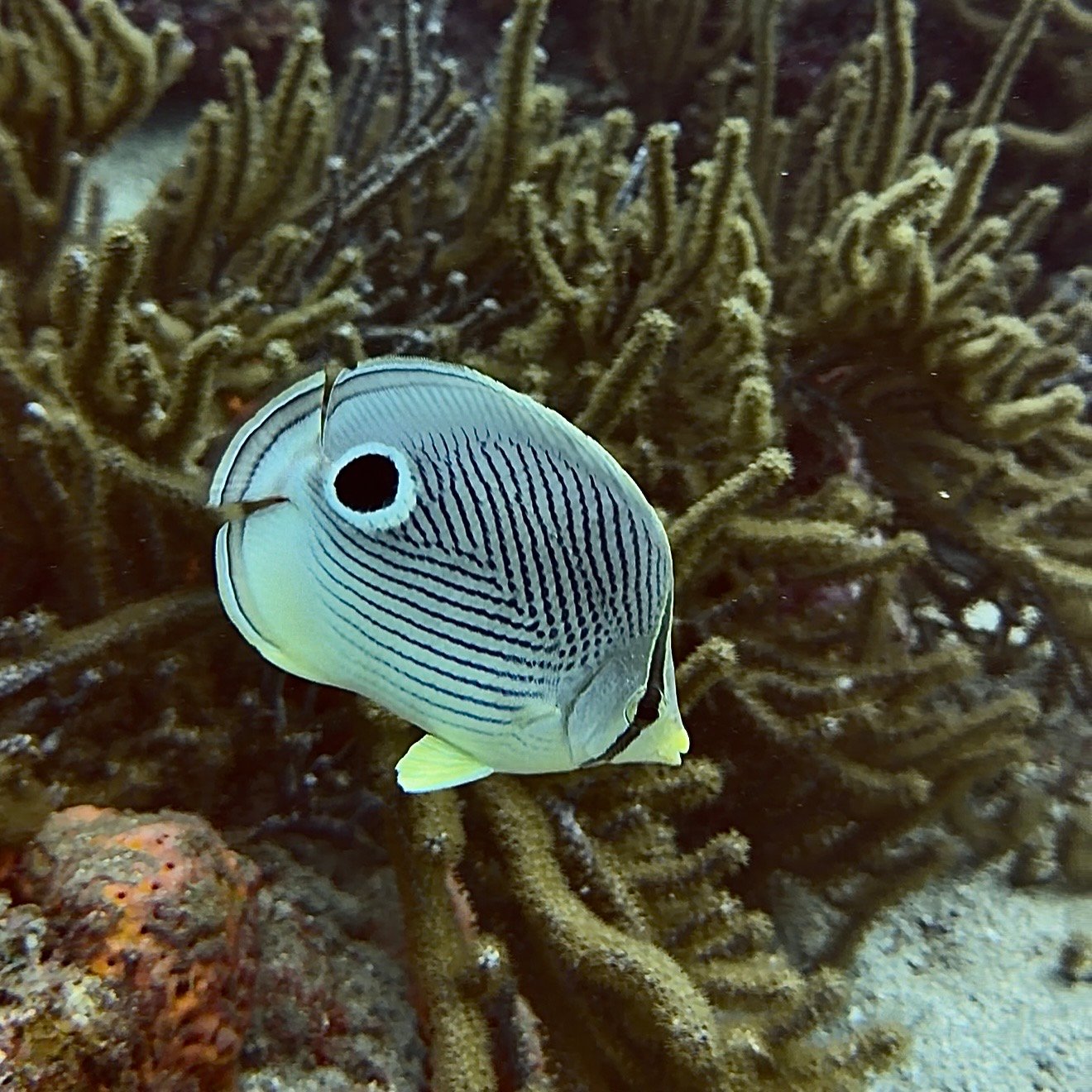
Angelfish are known for their beautiful patterns and vibrant colors. They often move around coral formations, searching for food and shelter.
Parrotfish are equally fascinating. Their beak-like mouths allow them to scrape algae from coral surfaces and other hard structures.
They play an important role in maintaining healthy reef ecosystems. As they feed, they also produce fine sand through the digestion of coral material.
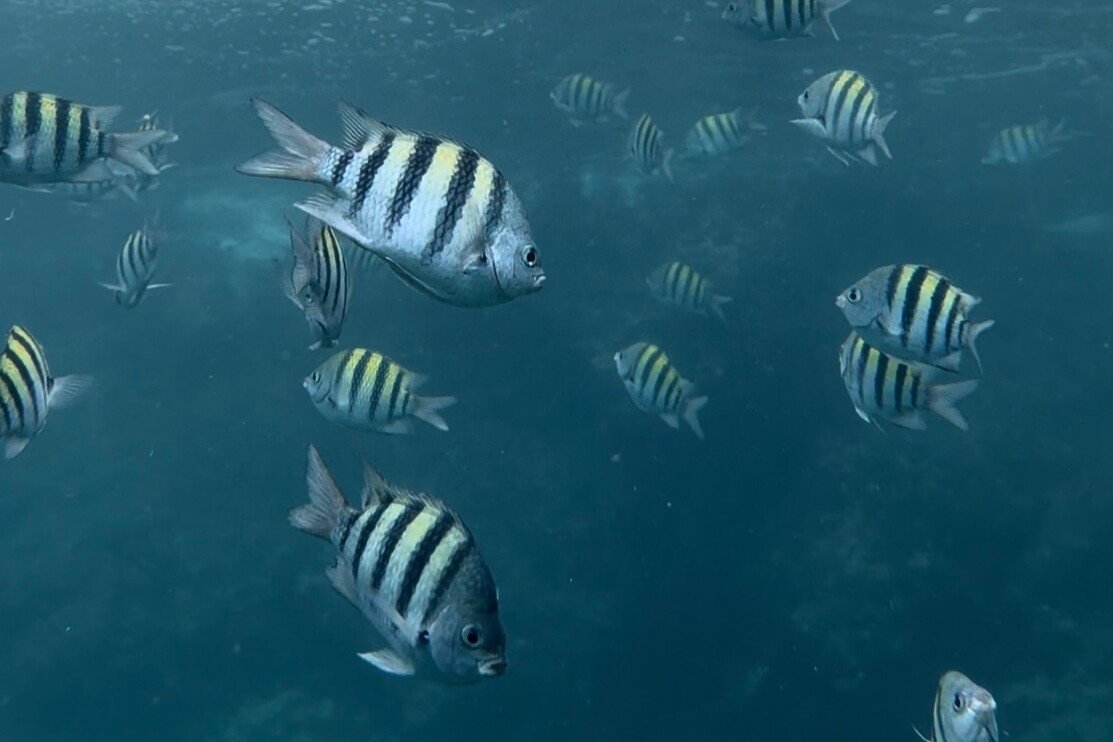
Watching schools of tropical fish move around the reef is one of the simplest pleasures of exploring the Caribbean underwater world.
Lobsters and Other Crustaceans
Look beneath rocky ledges and inside small reef openings, and you may discover lobsters hiding from predators.
Caribbean spiny lobsters are recognizable by their long antennae and distinctive bodies. Unlike some other lobster species, they do not have large front claws.
They are mostly active at night, spending the day sheltering in crevices and caves.
Crabs and other small crustaceans also form an important part of the marine ecosystem, often going unnoticed by visitors who focus on the larger animals.
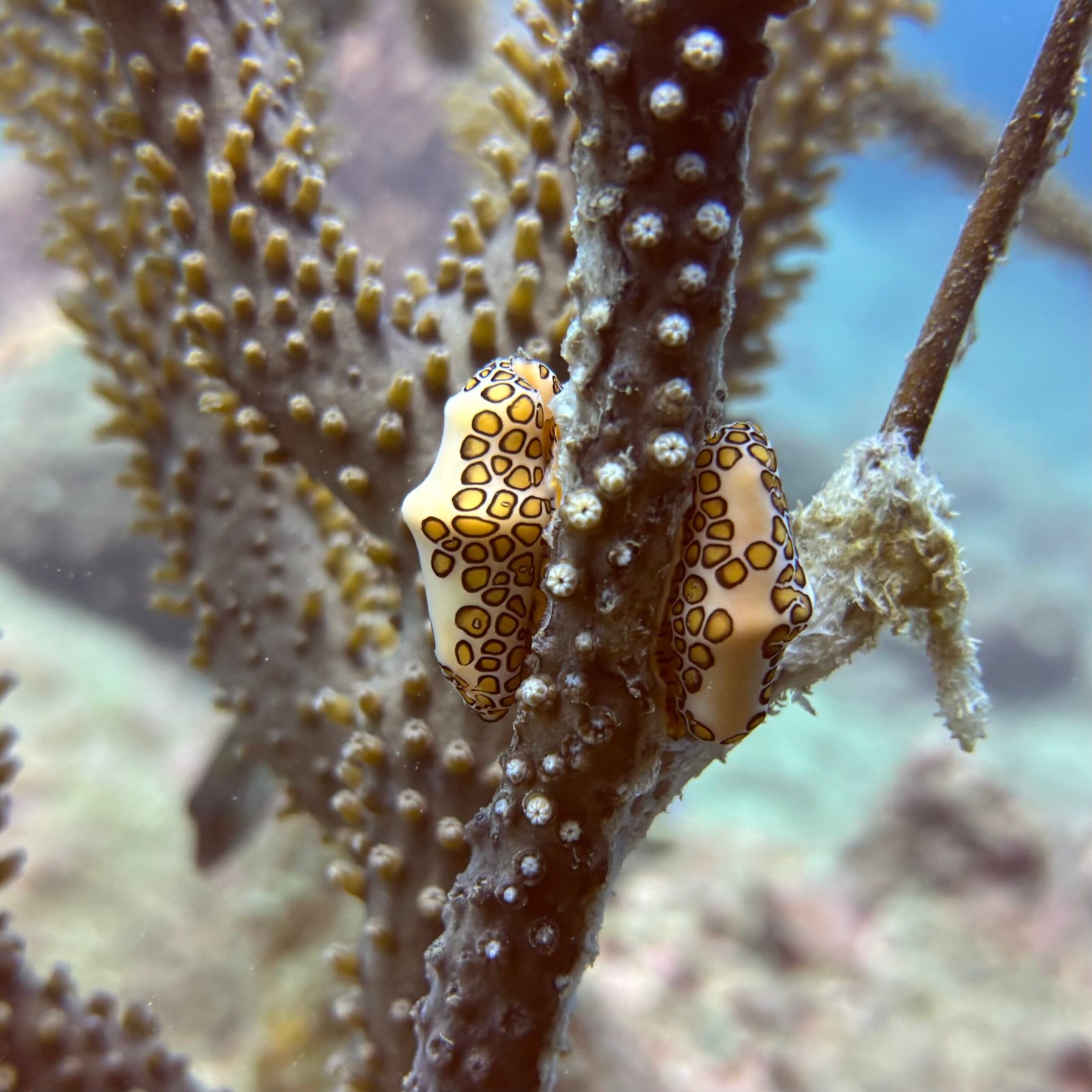
Sometimes the smallest discoveries are the most interesting.
Barracudas and Other Open-Water Fish
Not all marine life stays close to the reef.
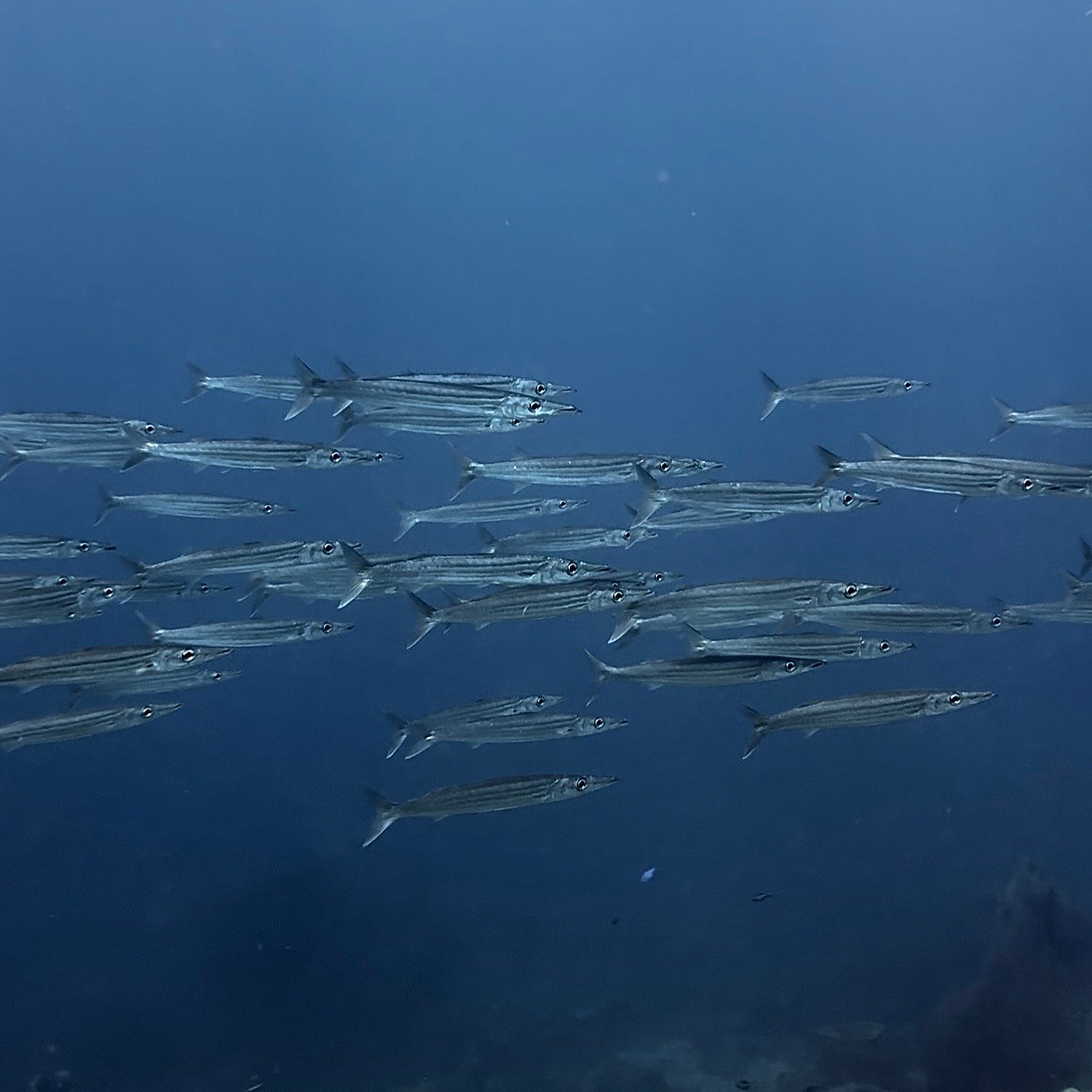
In open water, divers may encounter larger fish moving through the blue.
Barracudas are known for their elongated bodies, pointed heads, and impressive swimming speed. They often move individually or in groups, sometimes appearing suddenly in the distance.
Their streamlined bodies make them remarkable examples of adaptation to life in the ocean.
Observing larger fish in open water offers a completely different experience from exploring the small details of a coral reef.
Why Is Marine Life in Tayrona So Diverse?
One of the reasons Tayrona is so special is the variety of marine habitats found along its coastline.
The meeting of the Sierra Nevada de Santa Marta and the Caribbean Sea creates a remarkable natural landscape, both above and below the water.
The marine environments around Tayrona include:
- Coral reefs and coral formations
- Rocky underwater formations
- Seagrass beds
- Sandy seabeds
- Mangroves and coastal habitats
Each habitat provides food, shelter, and breeding areas for different marine species.
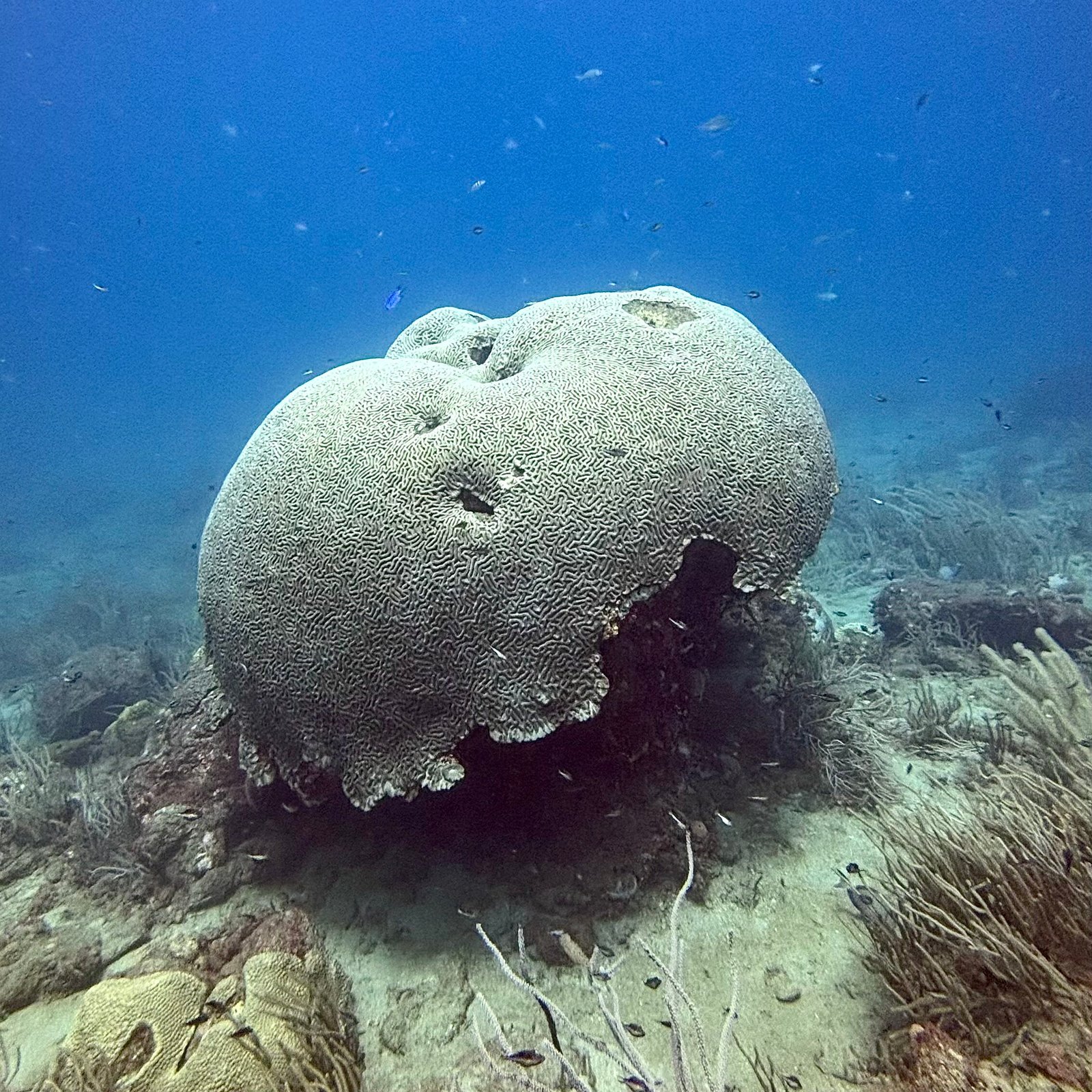
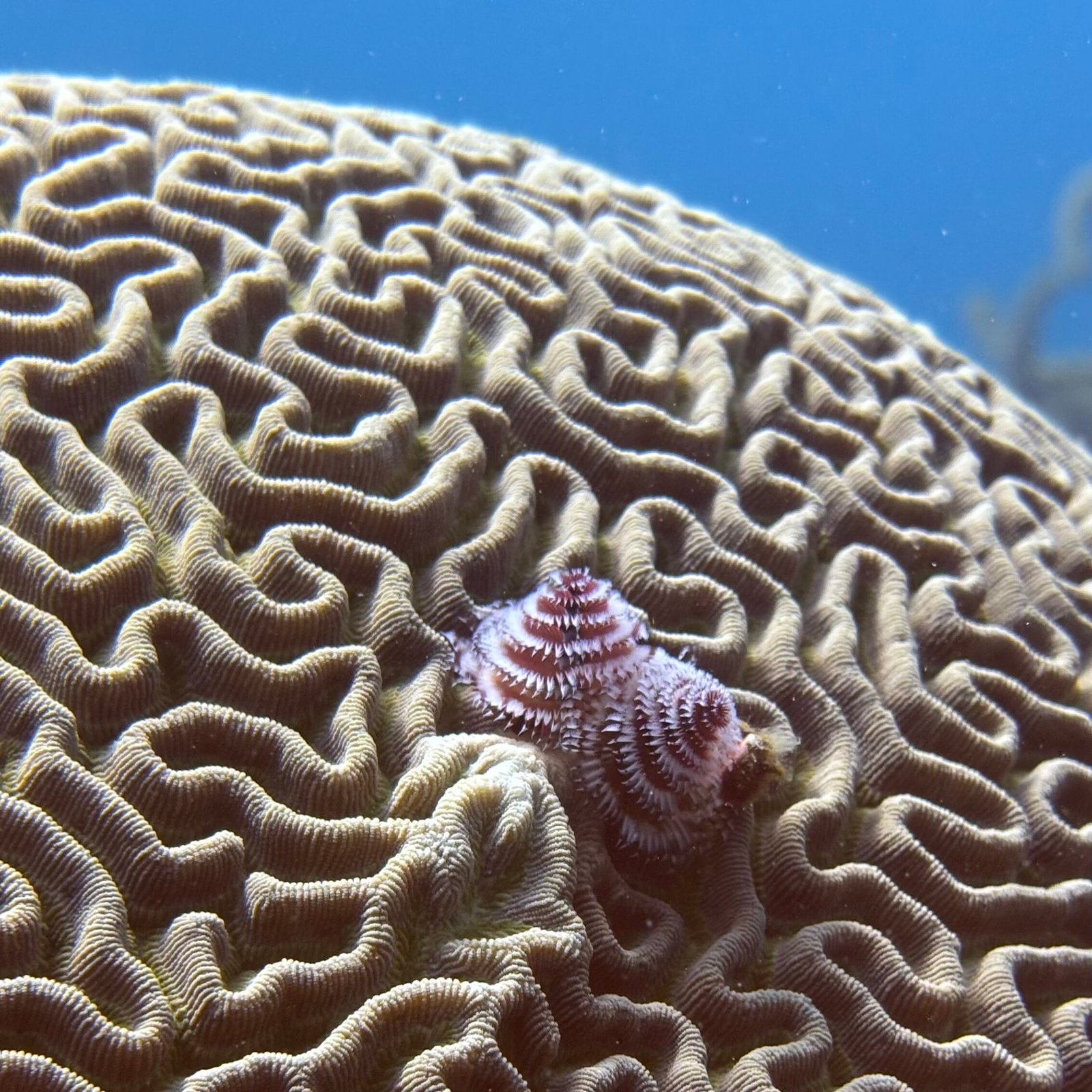
Coral reefs, in particular, are essential to marine biodiversity. Their complex structures provide hiding places and feeding grounds for countless organisms.
The variety of underwater environments means that every dive can be different. You might spend one moment watching a sea turtle glide over a reef and the next discovering a tiny octopus hiding between rocks.
Where Can You Discover Marine Life in Tayrona National Park?
There are different ways to experience the underwater world around Tayrona.
Snorkeling
Snorkeling allows visitors to explore shallow coastal waters and observe fish and other marine life from the surface.
Some areas of Tayrona offer opportunities for snorkeling, depending on sea conditions and local regulations.
Always choose authorized areas and follow the instructions of local guides and park staff.
Scuba Diving
For those who want to explore deeper underwater environments, scuba diving offers a completely different perspective.
Around the marine areas of Tayrona, divers can discover rocky formations, coral structures, and a variety of marine animals.
Popular diving areas include Granate Bay and Isla Aguja, where the underwater landscape offers plenty to explore.
At Sony Dive Center, our boat trips depart from Taganga, and we choose the dive locations according to the sea conditions and the experience level of our divers.
You do not need to be an experienced diver to discover the underwater world. First-time divers can try an introductory scuba diving experience with professional guidance, while certified divers can join guided fun dives.
Explore scuba diving experiences with Sony Dive Center.
How to Observe Marine Animals Responsibly
The underwater world is beautiful, but it is also fragile.
Every encounter with marine life should be based on respect for the animals and their natural environment.
Here are a few simple principles to follow:
- Never touch, chase, or feed marine animals.
- Maintain a respectful distance from sea turtles and other wildlife.
- Avoid standing on or touching corals.
- Keep your buoyancy controlled while scuba diving.
- Never remove shells, coral fragments, or other marine organisms.
- Avoid leaving rubbish or plastic in the ocean.
- Choose responsible snorkeling and diving operators.
Remember that the best wildlife encounter is one where the animal can continue behaving naturally, without being disturbed.
Discover the Underwater World of Tayrona with Sony Dive Center
Tayrona National Park is much more than beautiful beaches and tropical landscapes. Beneath the Caribbean Sea lies an extraordinary world full of color, movement, and fascinating marine life.
At Sony Dive Center, we believe scuba diving is about more than simply seeing underwater animals. It is an opportunity to slow down, breathe, connect with nature, and experience the ocean from a completely different perspective.
Based in Taganga, Santa Marta, we organize personalized diving experiences in the marine areas of Tayrona National Park.
Whether you are trying scuba diving for the first time or already hold a certification, we would love to show you the underwater beauty of this special part of Colombia.
Explore. Breathe. Belong.
Discover scuba diving with Sony Dive Center.
Frequently Asked Questions
What marine animals can you see in Tayrona National Park?
The waters around Tayrona are home to a variety of Caribbean marine animals, including sea turtles, porcupinefish, octopuses, moray eels, trumpetfish, angelfish, parrotfish, lobsters, and barracudas. The species you encounter depend on the location and conditions.
Can you see sea turtles in Tayrona National Park?
Sea turtles inhabit the Caribbean waters around Tayrona. They may be encountered while snorkeling or scuba diving, although wildlife sightings can never be guaranteed.
Is there coral reef in Tayrona National Park?
Yes. Tayrona has coral formations and reef ecosystems that provide habitat for many species of tropical fish and other marine organisms.
Can you scuba dive in Tayrona National Park?
Yes. Scuba diving is available in designated marine areas. Dive trips depart from nearby locations such as Taganga, and dive sites are selected according to sea conditions and diver experience.
Do you need scuba diving experience to explore marine life in Tayrona?
No. You can explore some shallow underwater areas through authorized snorkeling activities. If you want to try scuba diving, an introductory experience with a qualified instructor allows beginners to discover the underwater world without previous certification.
What is the best way to see marine life in Tayrona?
Snorkeling and scuba diving offer different ways to discover marine life. Snorkeling is suitable for exploring shallow areas, while scuba diving allows you to spend more time underwater and explore deeper reef environments.
Is it safe to touch marine animals or coral?
No. Marine animals and coral should never be touched or disturbed. Observing wildlife from a respectful distance helps protect the ecosystem and keeps both visitors and animals safer.
Plan your next underwater adventure in Colombia with Sony Dive Center.
Mini gallery