
Can You Scuba Dive in Tayrona National Park? A Complete Practical Guide
Yes — you can scuba dive in Tayrona National Park, and it is one of the most unique diving locations in Colombia.
Santa Marta sits where the Sierra Nevada mountains meet the Caribbean Sea, creating one of the most biodiverse regions in the country — not only on land, but also underwater. The mountains don’t stop at the waterline. What you find beneath the surface is shaped by that same dramatic geography: rocky formations, deep coral structures, and a living ecosystem that changes with every season.
This guide covers everything you need to know before you go — marine life, conditions, dive depths, prices, and how it works for beginners.
WHY SCUBA DIVING IN TAYRONA IS UNLIKE TYPICAL CARIBBEAN DIVING
Most Caribbean dive destinations offer flat coral gardens in warm, shallow water. Tayrona is different — and you feel it the moment you descend.
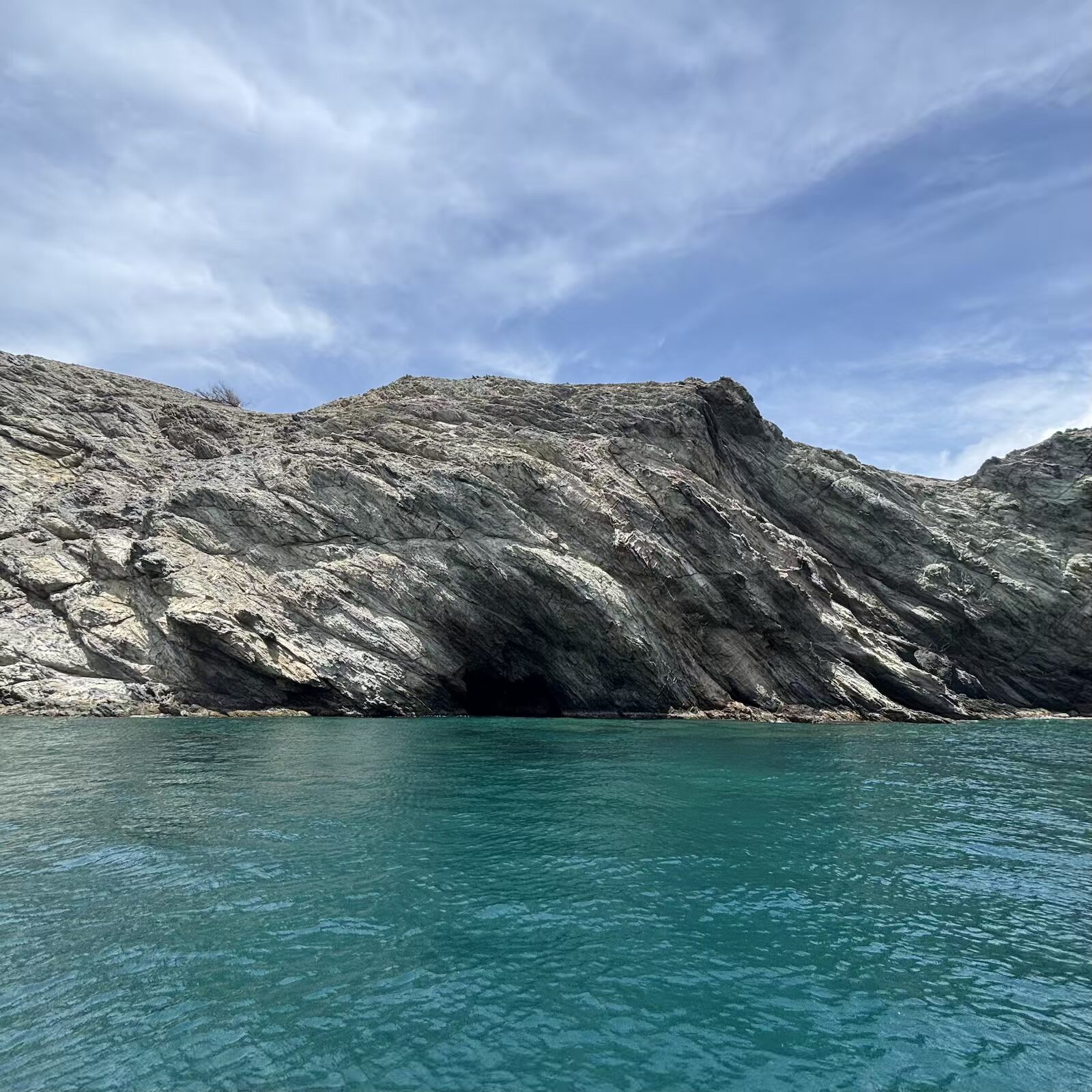
The park sits at the base of the Sierra Nevada de Santa Marta, the highest coastal mountain range in the world. That geography shapes everything underground: instead of sandy seabeds, you find large underwater boulders, rocky reef formations, and dramatic coral structures that create natural shelter for a wide range of species.
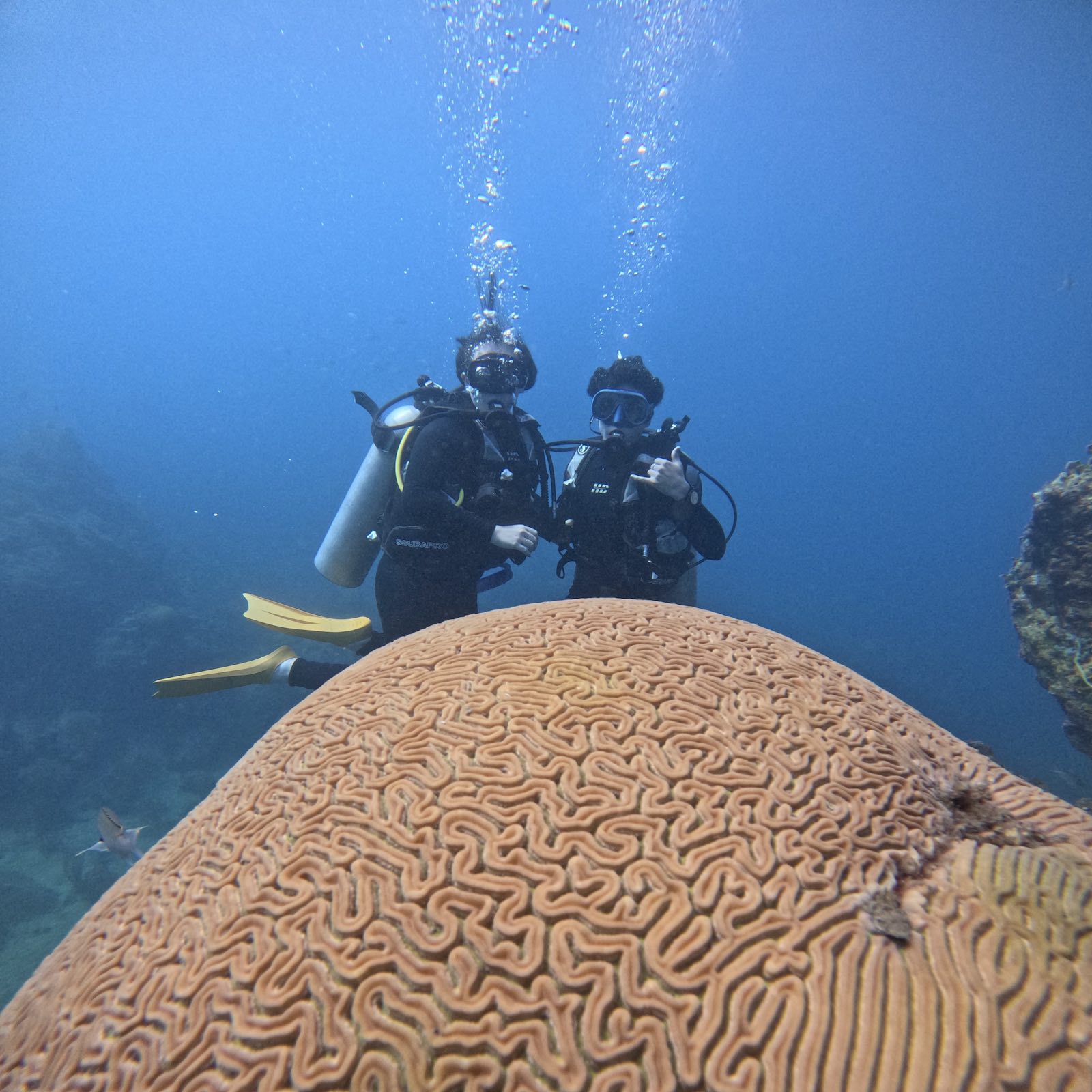
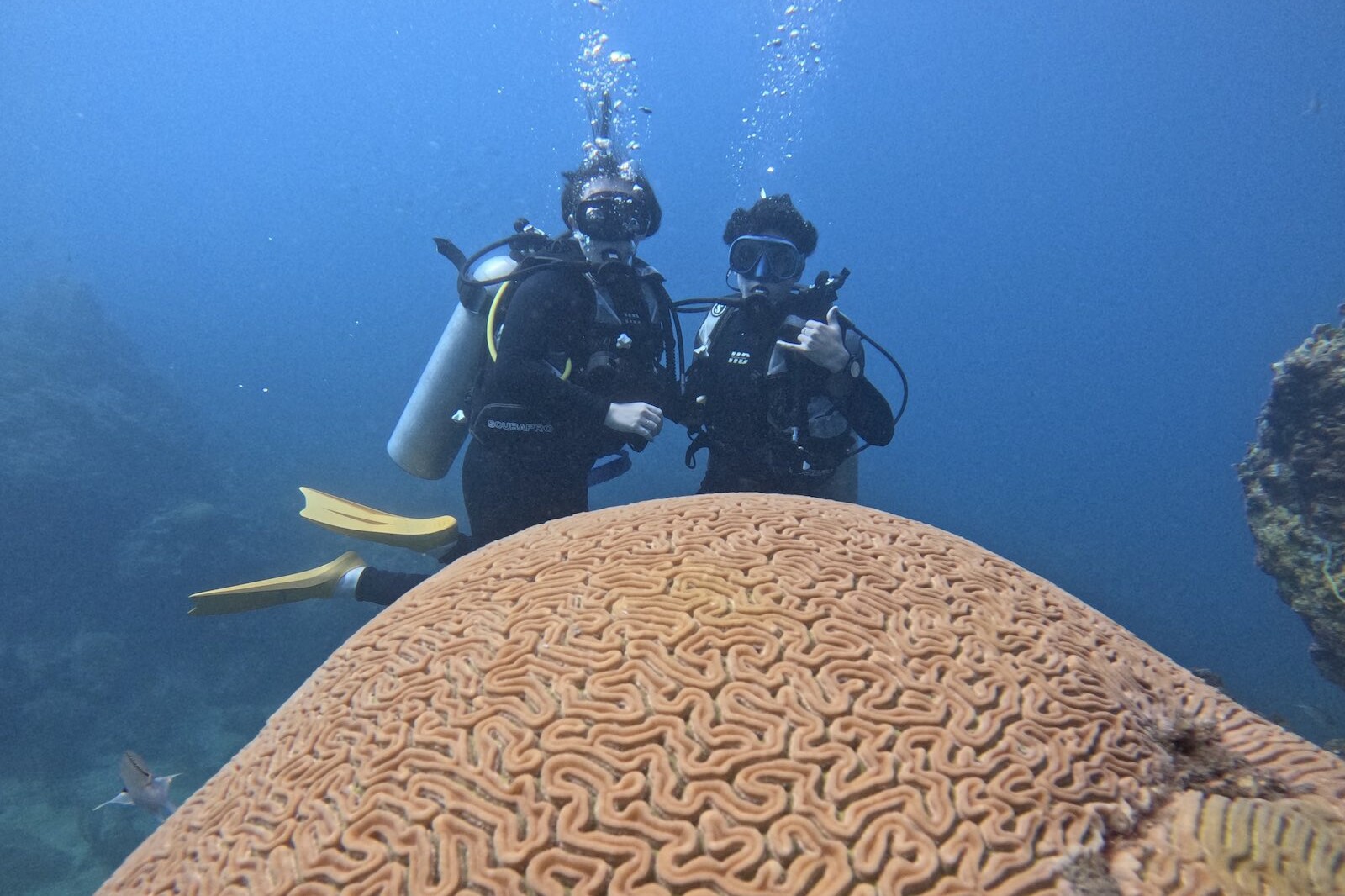
Brain corals and elkhorn coral formations dominate many sites. Sponges, sea fans, and soft corals fill the gaps between hard reef structures. The result is an active, dense ecosystem with far more vertical complexity than most Caribbean reefs — and a habitat that genuinely changes from dive to dive.
Tayrona is also a protected national park. Dive operators follow environmental guidelines designed to preserve the coral reefs and marine habitats. That protection is part of why biodiversity here remains so consistently high.
MARINE LIFE YOU CAN SEE IN TAYRONA
The variety of species in Tayrona is one of its defining characteristics. Visibility depends on season and conditions — but the biodiversity is reliably high throughout the year.
On a typical dive, you may encounter:
– Sea turtles
– Moray eels hiding between rocks
– Angelfish and parrotfish
– Porcupinefish
– Lobsters
– Octopus
– Barracuda
– Trumpetfish
– Rays (occasionally, in open water)
– Seahorses (in calmer, sheltered areas)
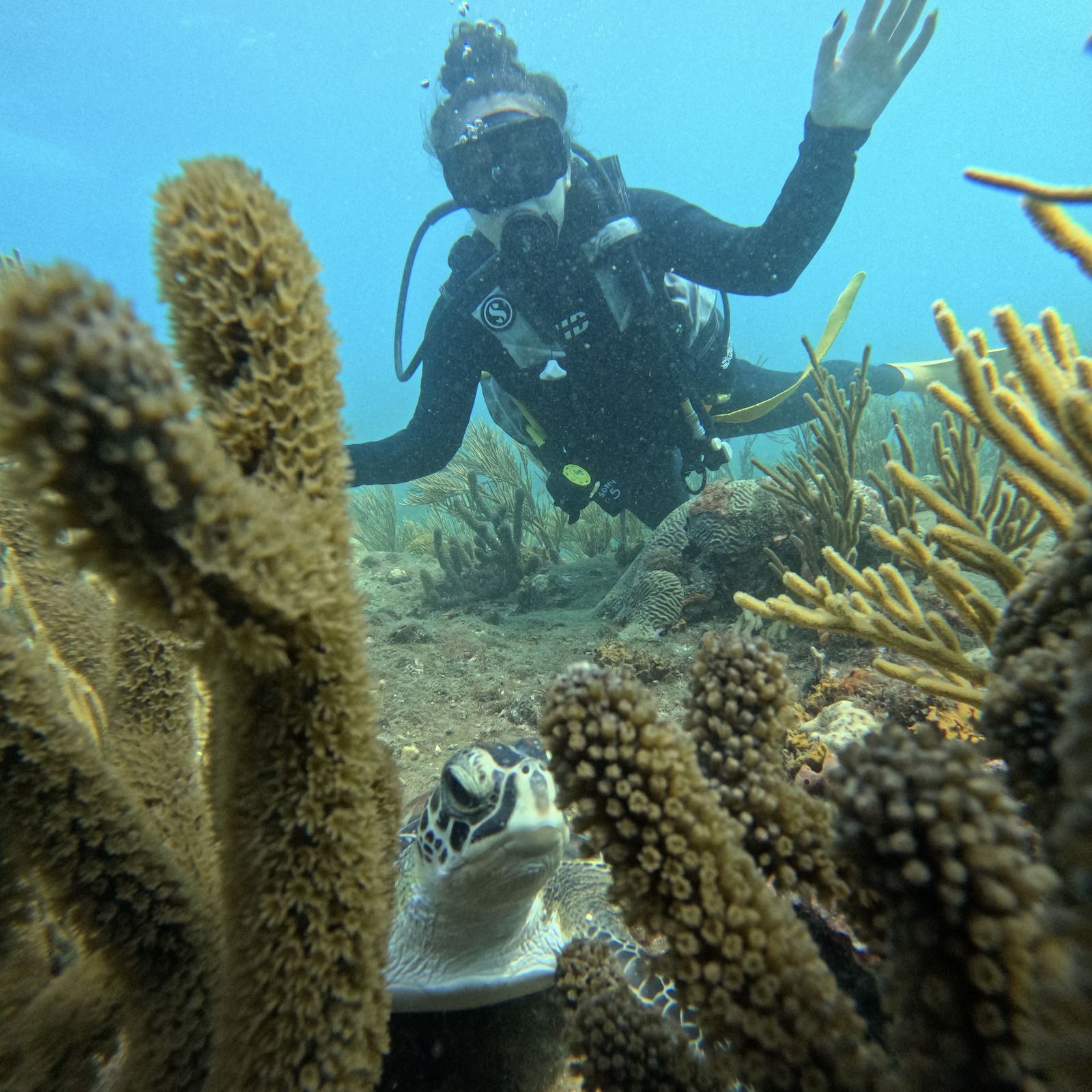
Sea turtles are sighted regularly. Seahorses are rarer but have been spotted. The combination of rocky terrain and nutrient-rich water means that what you find on any given dive depends on the season, the site, and the conditions that day.
One note: lionfish are an invasive species in the Caribbean and affect the natural balance of the reef ecosystem. At Sony Dive Center, we actively participate in lionfish control as part of our commitment to ocean conservation. Diving here can be active, not just observational.
CAN BEGINNERS SCUBA DIVE IN TAYRONA?
Yes. Many people take their first breath underwater here — and Tayrona is genuinely a good place to do it.
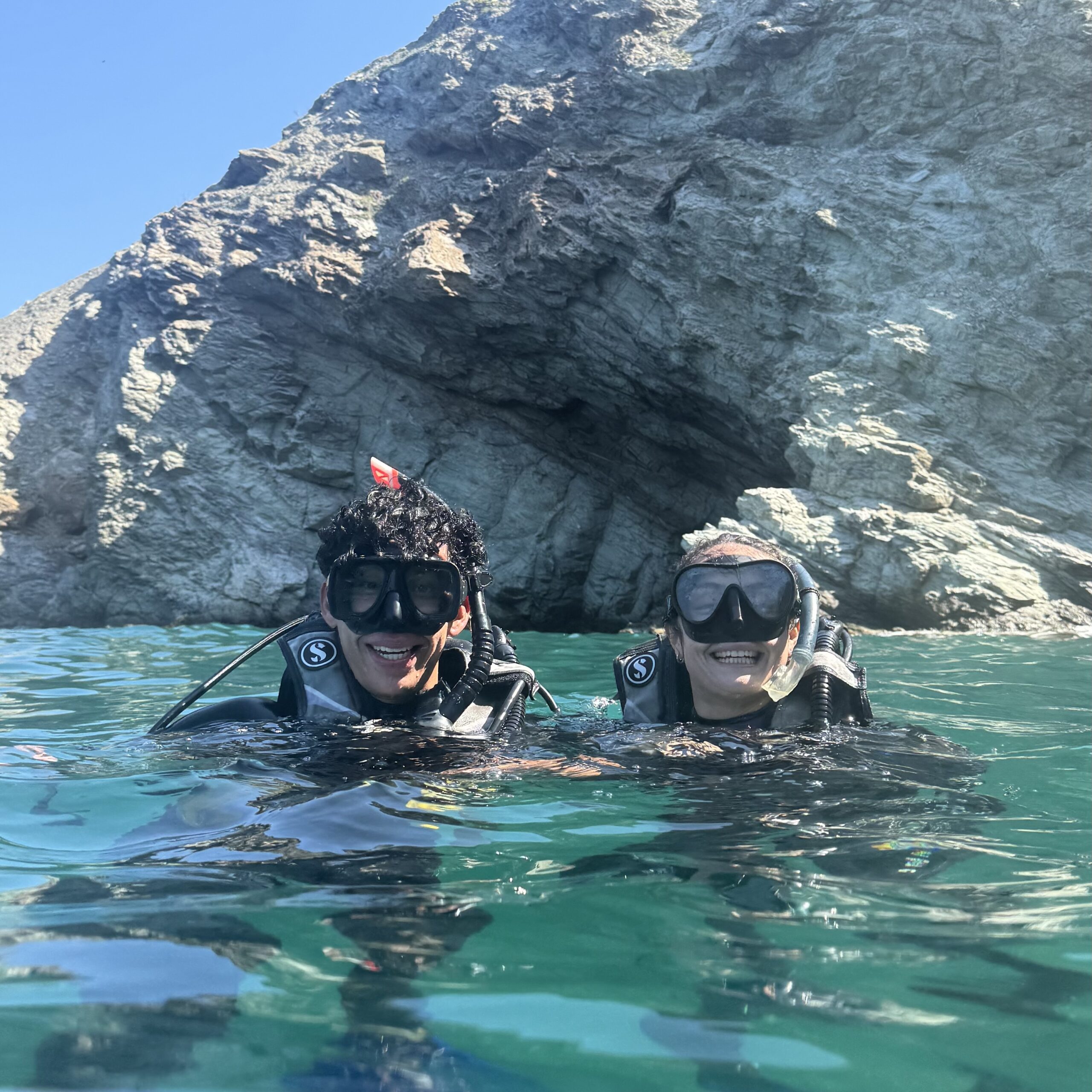
Several dive sites in the park feature gentle slopes, moderate depths, and relatively calm conditions that make them well-suited to first-time divers. Introductory dives for beginners typically take place between 6 and 12 meters. At that depth, you can explore coral formations, encounter reef fish, and experience full buoyancy — without the complexity that comes with deeper dives.
You do not need to know how to swim. You do not need any prior experience. A Discover Scuba Diving session includes a basic theory briefing, equipment orientation, skills practice in the water, and one or two guided ocean dives with an instructor present at all times. You move at your own pace. Nothing happens until you feel ready.
At Sony Dive Center, beginner groups are kept very small — a maximum of two divers per instructor. This is intentional. The goal is a calm, personal experience, not a production line.
Certified divers have access to a wider range of sites. Advanced Open Water divers can explore formations down to 30 meters.
DIVE DEPTHS IN TAYRONA: A QUICK OVERVIEW
Discover Scuba Diving (no certification required)
Depth: 6–12 meters
What to expect: Coral formations, reef fish, rocky terrain. Calm conditions, instructor at your side.
Fun Dives (Open Water certified)
Depth: 12–18 meters
What to expect: More complex terrain, higher species diversity, greater independence.
Advanced Dives (Advanced Open Water certified)
Depth: Up to 30 meters
What to expect: Deeper structures, pelagic encounters, dramatic underwater landscapes.
HOW A DIVING TRIP TO TAYRONA ACTUALLY WORKS
All trips depart from Taganga — a small fishing village 10 to 15 minutes from Santa Marta by taxi. Taganga is the main diving hub on this stretch of the Colombian Caribbean coast, and the natural departure point for boat trips into the park.
Step 1 — Arrive at Sony Dive Center in Taganga
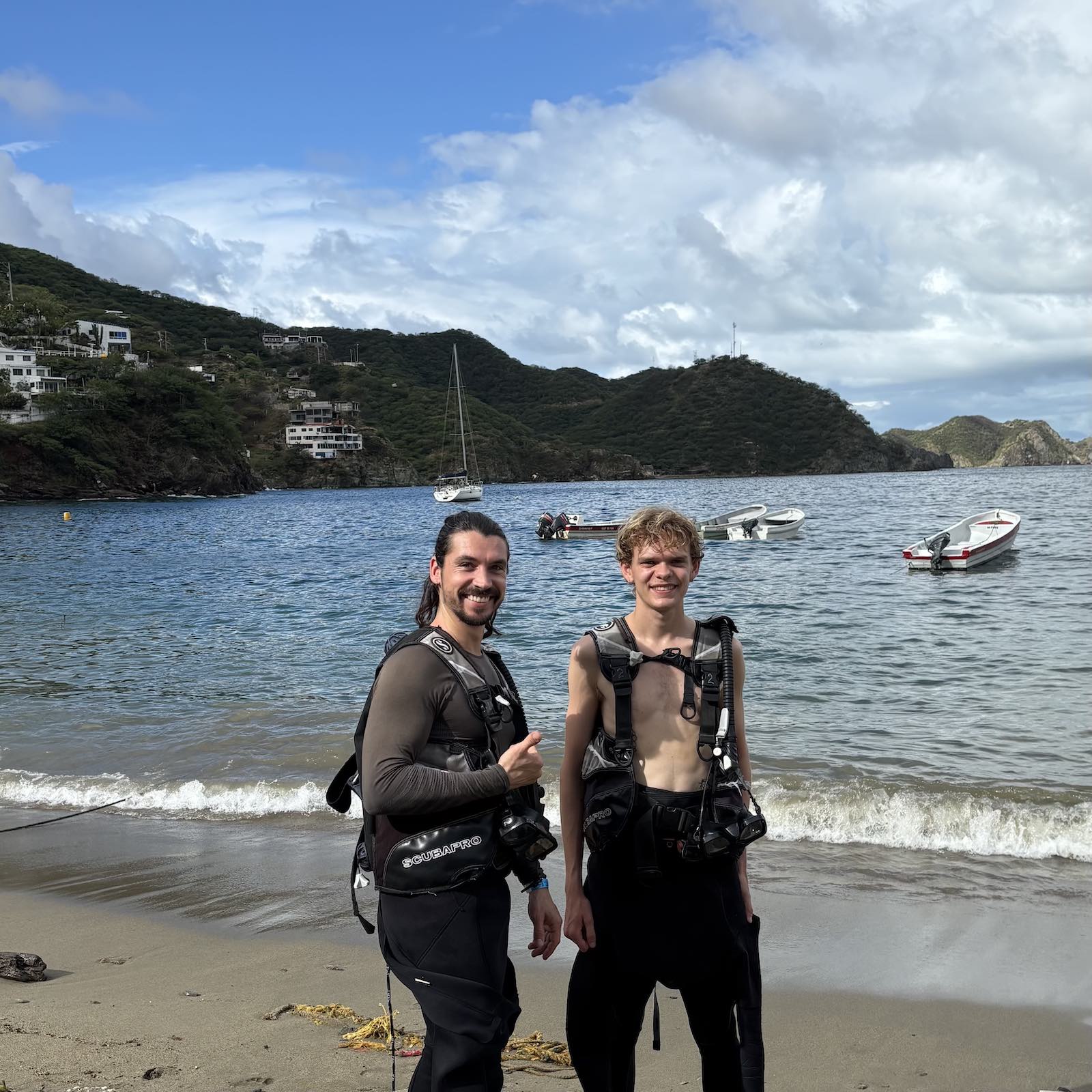
Morning start. The dive center is calm, just steps from the sea. We welcome the group, fill out a short medical form, and give a clear explanation of how the day will go. No rush.
Step 2 — Theory and equipment briefing
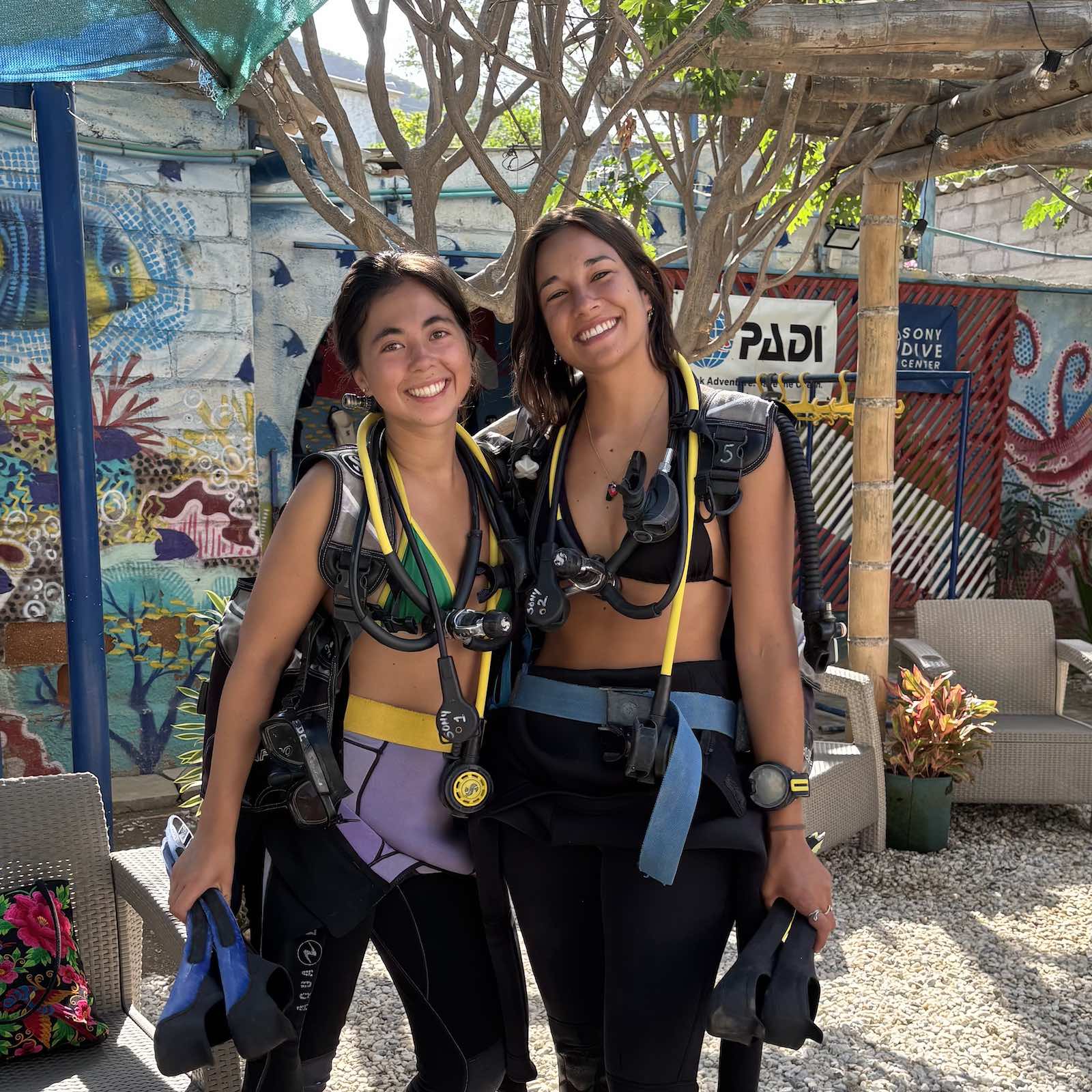
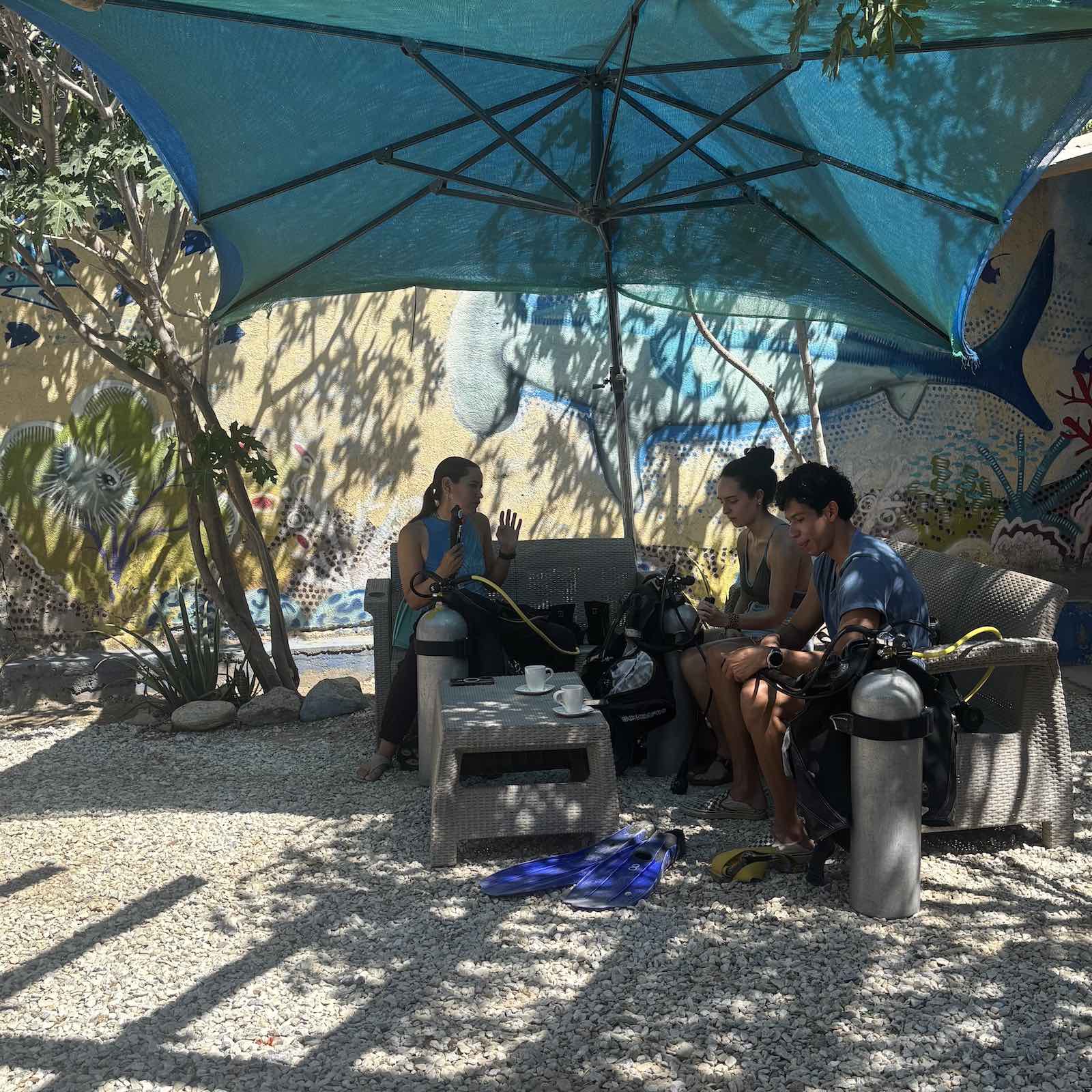
We cover how to breathe underwater, hand signals, safety basics, and equipment fitting. Beginners practice with the gear on land before entering the water. Certified divers go through a dive plan briefing.
Step 3 — Boat departure to Tayrona
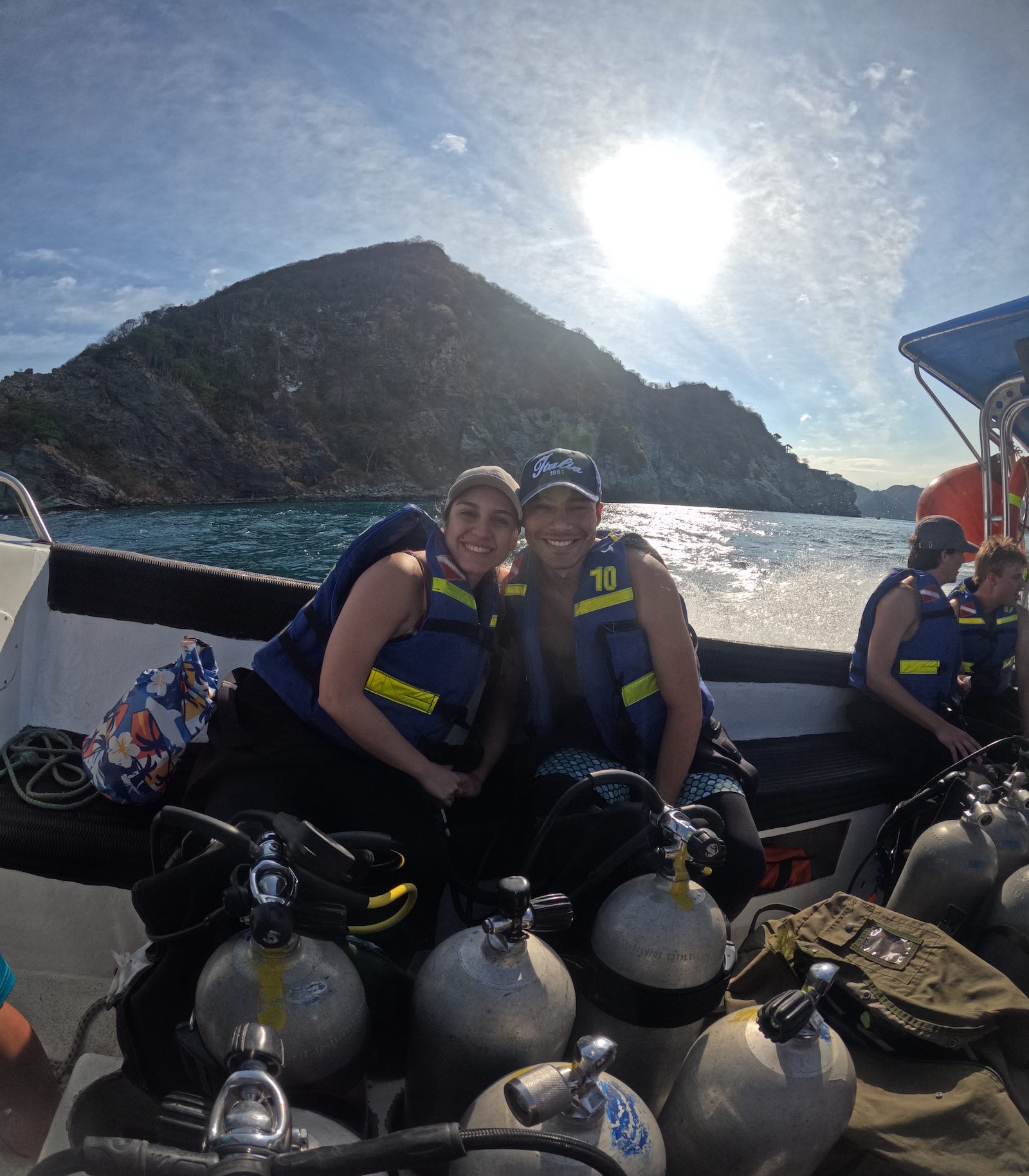
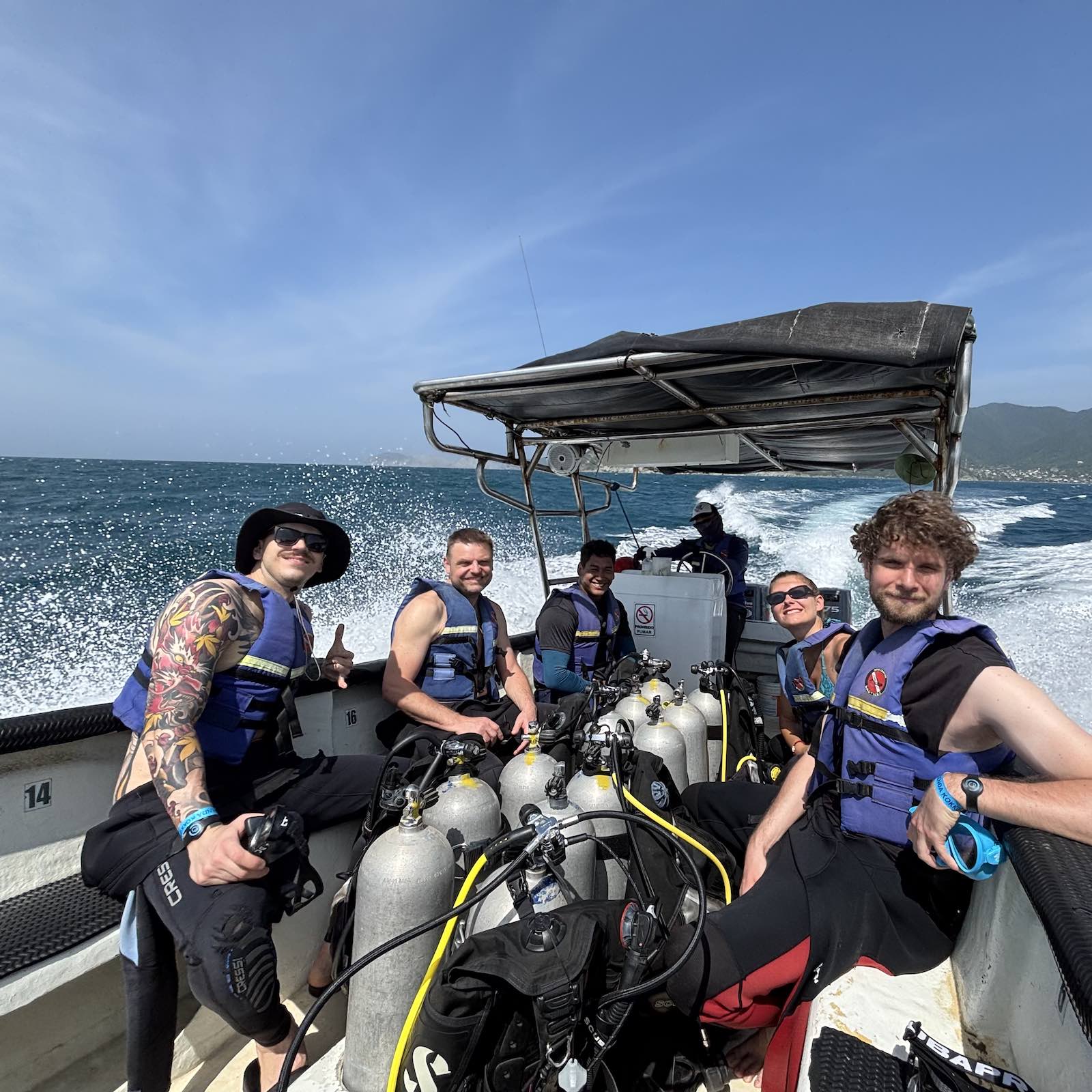
The boat is half a street from the dive center. We depart around 8:30 AM and reach the dive sites in approximately 20 minutes. Sites — typically Granate Bay or Isla Aguja — are selected on the day based on conditions and group level.
Step 4 — First dive
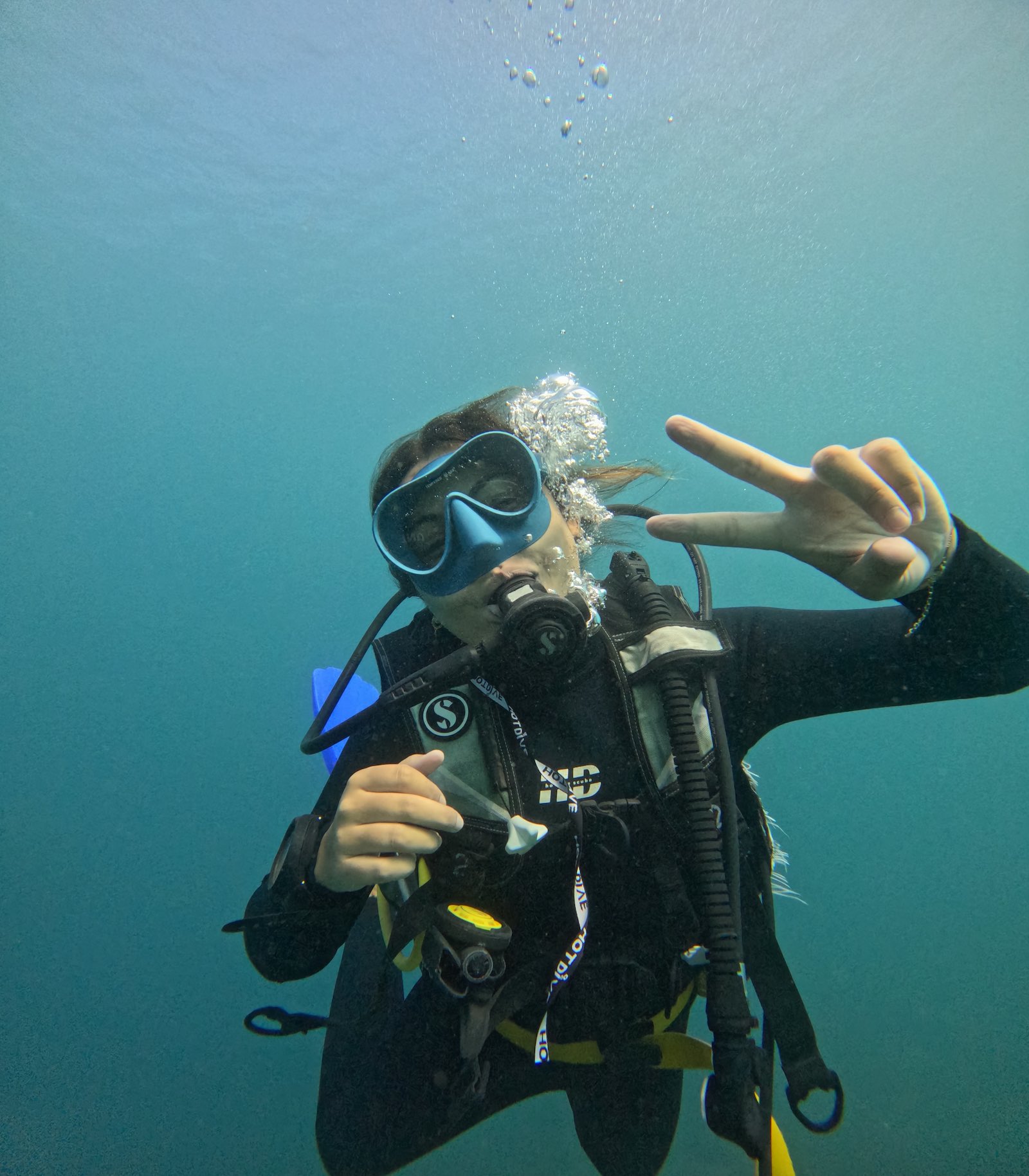
Entry is slow and calm. For beginners, the instructor guides you through your first breath underwater at the surface before descending together. The first dive lasts around 40 to 45 minutes. Colorful corals, reef fish, underwater silence.
Step 5 — Surface interval
Back on the boat: a sandwich, natural lemonade, and time to absorb what you just saw. No rush between dives.
Step 6 — Second dive
A second site, a different angle. By now you’re more relaxed, more present. This dive is often the better of the two — you know what to expect, and you can be fully there for it.
Step 7 — Return to Taganga
Back at the dive center around midday. Rinse the gear, change, and enjoy fresh fruit or juice at Sony Fresh Bar. The afternoon is yours.
BEST TIME TO DIVE IN TAYRONA
Diving is possible year-round. The main variable is the wind season, which affects surface conditions — not the fundamental quality of the underwater experience.
April to November — Generally calmer seas, better surface conditions. Good visibility. Most comfortable for beginners.
December to March — Stronger winds, occasionally cooler water, and currents that can improve underwater visibility and attract more marine life. A tradeoff that experienced divers often appreciate.
Dive sites are selected each morning based on current conditions. On most days, even during the wind season, there are sheltered sites that work well for all levels.
HOW MUCH DOES SCUBA DIVING IN TAYRONA COST?
Prices below are approximate and include equipment, tank, weights, boat, and professional guidance.
– Discover Scuba Diving (2 dives, no certification required): 300,000 – 450,000 COP
– Fun Dives (certified, 2 dives): 250,000 – 350,000 COP
– PADI Open Water Diver Course (lifetime certification): 1,400,000 – 1,600,000 COP
– PADI Advanced Open Water Diver: contact us for current pricing
Contact Sony Dive Center directly for availability and to confirm current prices.
IS SCUBA DIVING IN TAYRONA SAFE?
Yes — when done with a professional, certified operation.
The conditions at Tayrona are manageable for beginners on most days. The sites are well-known and regularly assessed. At Sony Dive Center, we keep groups small (maximum two divers per instructor), use well-maintained equipment, and adapt every dive to the level of the group and the conditions of the day.
All instructors are PADI certified. Briefings are clear, calm, and thorough. Environmental guidelines for diving inside the protected park are followed on every trip.
As with any dive destination, choosing a professional center — rather than the cheapest available option — is the most important safety decision you can make.
GETTING TO TAGANGA FROM SANTA MARTA
Taganga is 10 to 15 minutes from Santa Marta by taxi. Local buses also connect the two. Most divers stay in Santa Marta and come to Taganga for the morning, returning well before lunch.
Santa Marta is served by Simón Bolívar International Airport, with direct flights from Bogotá, Medellín, and several other Colombian cities.
FREQUENTLY ASKED QUESTIONS
Do I need a certification to dive in Tayrona?
No. Beginners can join a Discover Scuba Diving experience with no prior certification or swimming ability. Certified divers access a wider range of sites and depths.
Can I combine diving with a visit to Tayrona’s beaches?
Yes — on different days. Diving departs by boat from Taganga. The park’s beaches are accessible overland via the main entrance. Many visitors do both during the same trip to Santa Marta.
How long is a typical diving trip?
Half a day. Morning departure, two dives, surface interval, and return to Taganga around midday.
What language are courses and briefings in?
English and Spanish.
Can I get a PADI certification in Santa Marta?
Yes. The PADI Open Water Diver course takes three days, includes five training dives, and gives you a lifetime certification valid anywhere in the world. Santa Marta and Taganga are excellent places to complete it — warm water, accessible sites, and a calm learning environment.
What makes diving in Tayrona different from other Caribbean destinations?
The underwater terrain. Most Caribbean destinations feature flat coral reefs. Tayrona has rocky formations, large boulders, ledges, and dramatic coral structures shaped by the mountains above. It’s more rugged, more varied, and — on any given dive — more surprising.
READY TO DIVE IN TAYRONA?
Whether it’s your first time underwater or your hundredth dive, the ocean here is worth experiencing.
Small groups. Calm pace. Real ocean.
👉 Contact us on WhatsApp to check availability
👉 Learn more about Discover Scuba Diving
👉 Fun Dives for certified divers
Mini gallery